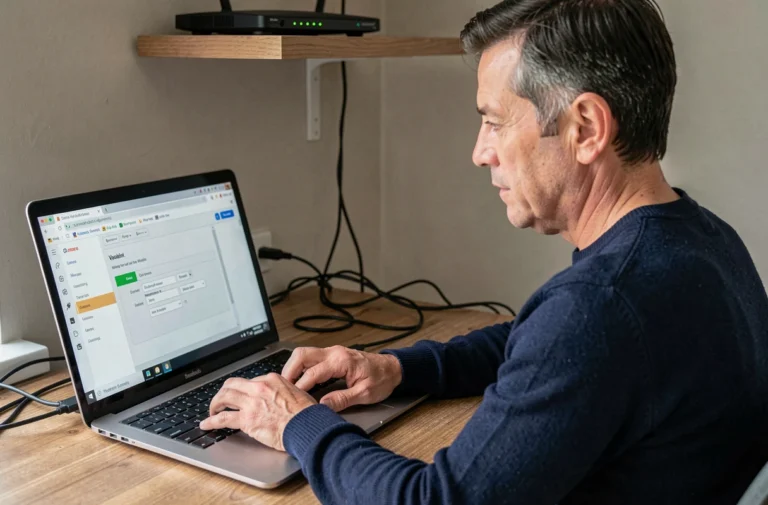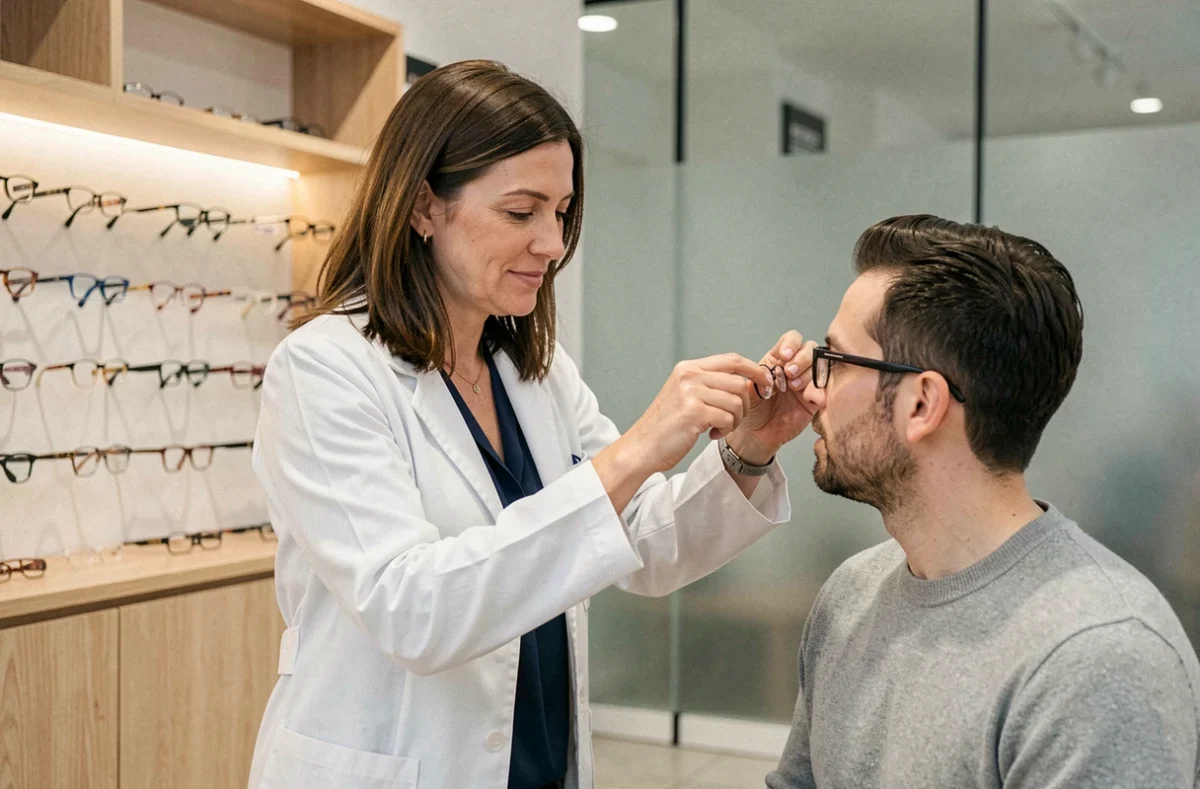
In France, the majority of glasses wearers still go through a physical store to get equipped. The network of independent and franchised opticians remains dense, even in modest-sized municipalities. However, behind the display window and the frame stands, the actual scope of services varies from one point of sale to another, and several recent regulatory changes are reshaping what can be expected from a local optician.
Standardized quote and 100% Health basket: what the optician must present to you
Before any sale, the optician is required to provide a standardized quote. This document distinguishes two columns: the basket A (100% Health, with no out-of-pocket costs) and basket B (freely priced offer). The DGCCRF checks that this distinct presentation is indeed respected in-store.
Basket A includes frames and lenses with capped prices. The equipment is fully covered by Health Insurance and complementary health insurance, with no out-of-pocket expenses for the wearer. Basket B allows for a choice among more elaborate frames or lens treatments, but with variable out-of-pocket costs.
Consulting the services offered by Optisanté helps to better visualize the extent of expected services, from the quote to the final adjustment. A local optician who takes the time to detail these two baskets, without systematically steering towards basket B, fulfills their advisory obligation. If the quote does not mention the 100% Health alternative, it is a warning signal.
Visual control in-store and optical tele-expertise: where the optician’s role ends
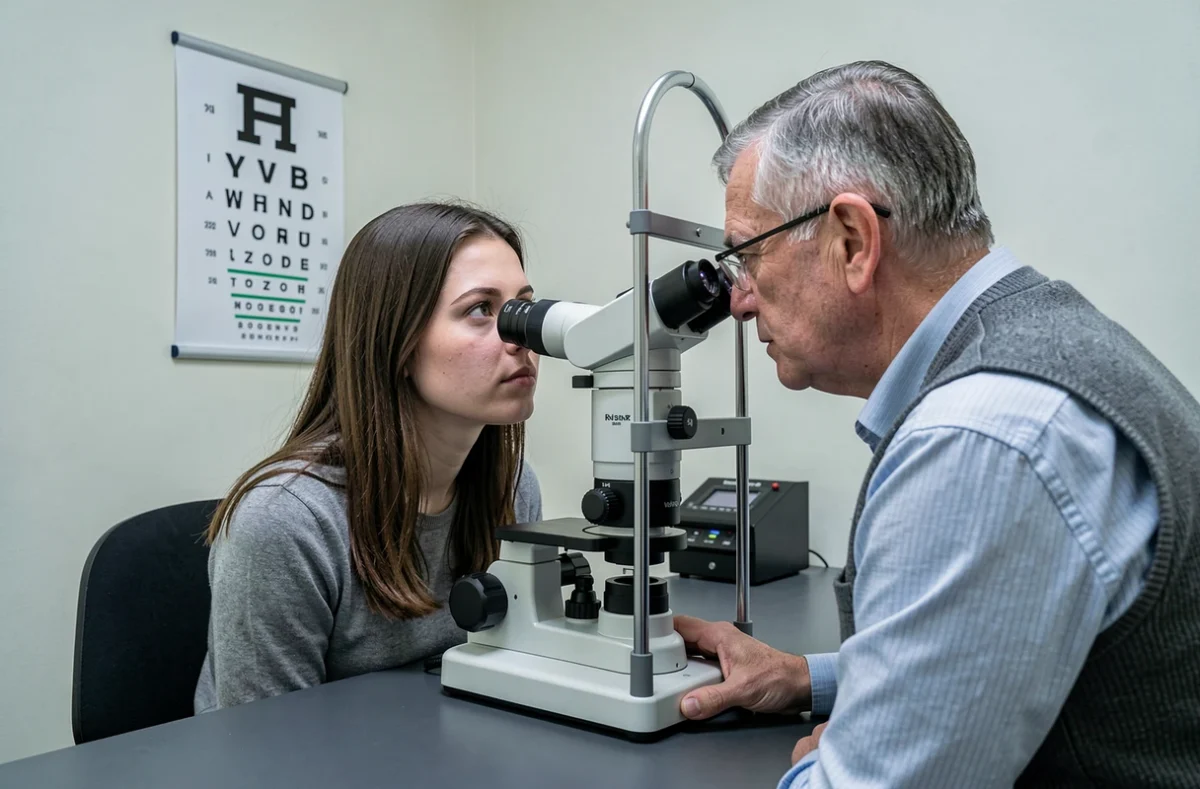
The optician is authorized to perform a non-medical visual check. They can verify an existing correction, adjust centering parameters, or detect a change in vision that justifies a referral to an ophthalmologist. This check does not replace a complete medical examination.
Optical tele-expertise is currently the subject of recent regulatory debate. Some companies already offer prescriptions for glasses or contact lenses after an examination conducted directly in-store, without a prior visit to an ophthalmologist. The National Union of Ophthalmologists is calling for stricter regulations to ensure patient safety.
The so-called “fraud” law, adopted in June 2026, generally requires direct communication between the doctor and the patient, including in tele-expertise devices. The application modalities remain to be clarified. For glasses wearers, this means that some services offered in-store could evolve or be restricted in the coming months.
What the optician can do without a recent prescription
- Renew equipment if the prescription is still valid (its validity period depends on the patient’s age and the type of correction)
- Adjust the power of the lenses within the limits set by regulations, after a refraction check in-store
- Make mechanical adjustments to an existing frame (temples, nose pads, tilt)
On the other hand, any suspicion of ocular pathology (glaucoma, macular degeneration, retinal anomaly) falls exclusively under the ophthalmologist’s purview. A good local optician knows how to quickly refer to the competent doctor.
Complementary services in-store: distinguishing regulated from commercial
Some optical stores display services that go beyond the classic scope: hearing aids, hearing screening, sale of dietary supplements for vision. An optician cannot legally offer hearing aids with their sole optician-lunetier diploma. The two professions are regulated separately, and practicing audioprosthetics requires a specific state diploma.
When a store offers both activities, it implies the presence of a professional holding the corresponding diploma, or an optician who has obtained a dual diploma. This detail is worth verifying before entrusting one’s hearing health to an optical point of sale.
Assembly workshop and after-sales service
The workshop work is one of the most concrete markers of a local optician compared to an online sales site. The cutting, edging, and mounting of lenses on the frame are done on-site in most independent stores. This technical know-how allows for immediate adjustments if centering is an issue or if the frame requires a retouch.
The after-sales service generally includes tightening screws, replacing nose pads, realigning temples, and ultrasonic cleaning. These services are often free at the optician who sold the equipment. On this point, field feedback varies: some independents ensure very responsive follow-up, while high-volume chains may apply longer delays.
Advertising in optics and promotions: a framework in full reorganization
A draft decree aimed at regulating or even prohibiting certain advertising practices among opticians divided the representative organizations of the sector in 2026. The stated goal: to limit aggressive promotional offers that encourage premature equipment renewal.
The Ministry of Health ultimately decided not to prohibit advertising for glasses, following mobilization from the sector. Independent opticians, in particular, believed that this restriction would have favored large brands with already established notoriety.
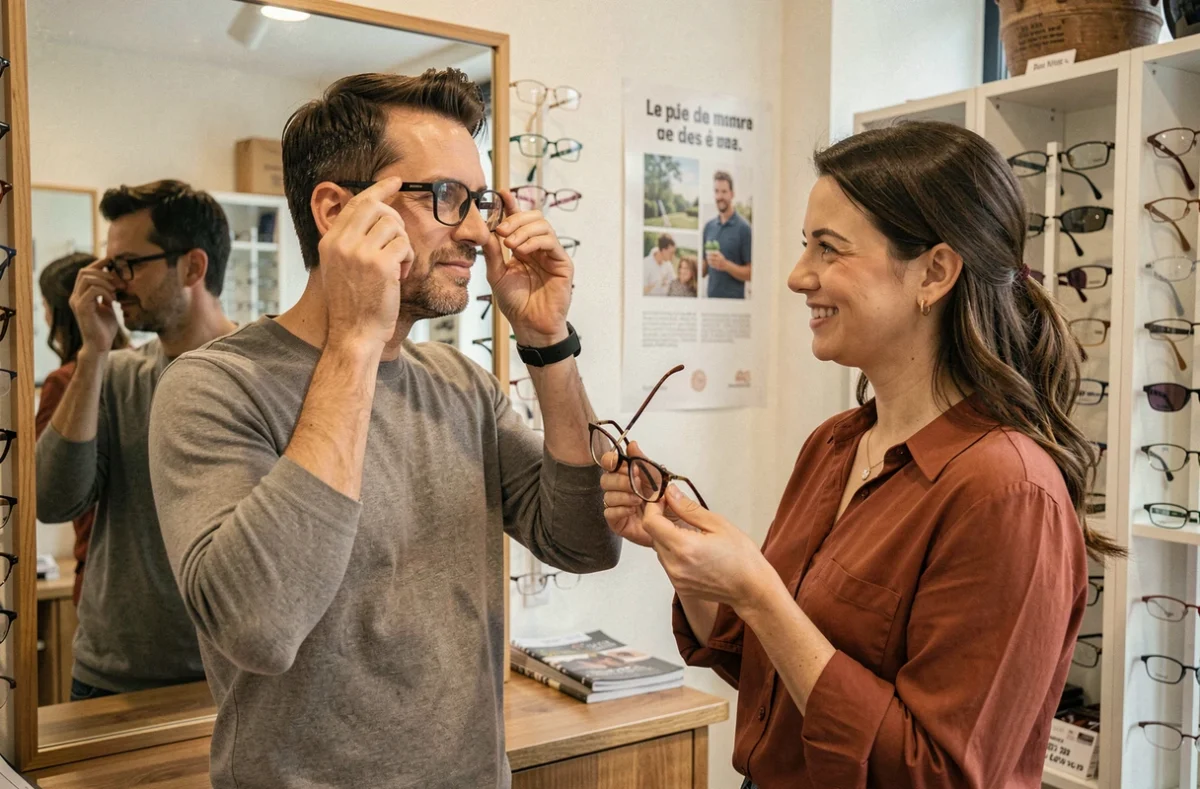
For consumers, this means that promotions remain allowed, but one must be attentive to what they actually cover. A “two pairs for the price of one” offer may hide an additional cost on lenses or exclude anti-reflective treatments. Reading the standardized quote line by line remains the best protection.
- Check that the quote clearly distinguishes between basket A and basket B
- Compare the price of lenses outside of promotions with the price displayed during the offer
- Ask if surface treatments (anti-reflective, blue light blocking, hardened) are included or charged extra
The geographical proximity of an optician facilitates these verifications. Being able to return to ask a question, contest a line of the quote, or request an adjustment without shipping costs or delivery delays remains a tangible advantage of the physical store over online purchases. It is also in this direct relationship that the difference between a simple point of sale and a true visual health professional is played out.