Pierce a merguez, and you condemn its juiciness. Forget pre-made recipes: baking a merguez in the oven tolerates neither mechanical gestures nor approximate settings. Every minute counts, every degree weighs in the balance of tenderness. In this game, vigilance supplants habits. Aficionados know it: success lies in the details.
Some rely on the push of a hot oven to achieve a seared skin, while others opt for a more moderate temperature, extending the time, monitoring each flip. On both sides, success obeys only care: time, intensity, placement, everything contributes to preserving the personality of the merguez. Here, no gesture is trivial; every step requires attention, commensurate with its promise: a meaty sausage, wrapped in a still-glossy casing.
Why do merguez dry out so quickly in the oven?
Baking merguez intrigues more than one enthusiast. In full dry heat, exposed on their tray or grill, these little red sausages quickly lose the moisture that makes them famous. From the very first minutes, the oven dissipates without return the juices that bead on the surface. If no one intervenes, the fat leaks out, the muscle tightens, and the heart dries out.
That’s not all: many think they are doing the right thing by piercing the skin of the merguez “to prevent them from bursting.” It’s quite the opposite: piercing releases the flavors, accelerates the loss of juices. Trying to prevent bursting condemns the very tenderness one seeks. Preserving the casing means preserving the juiciness.
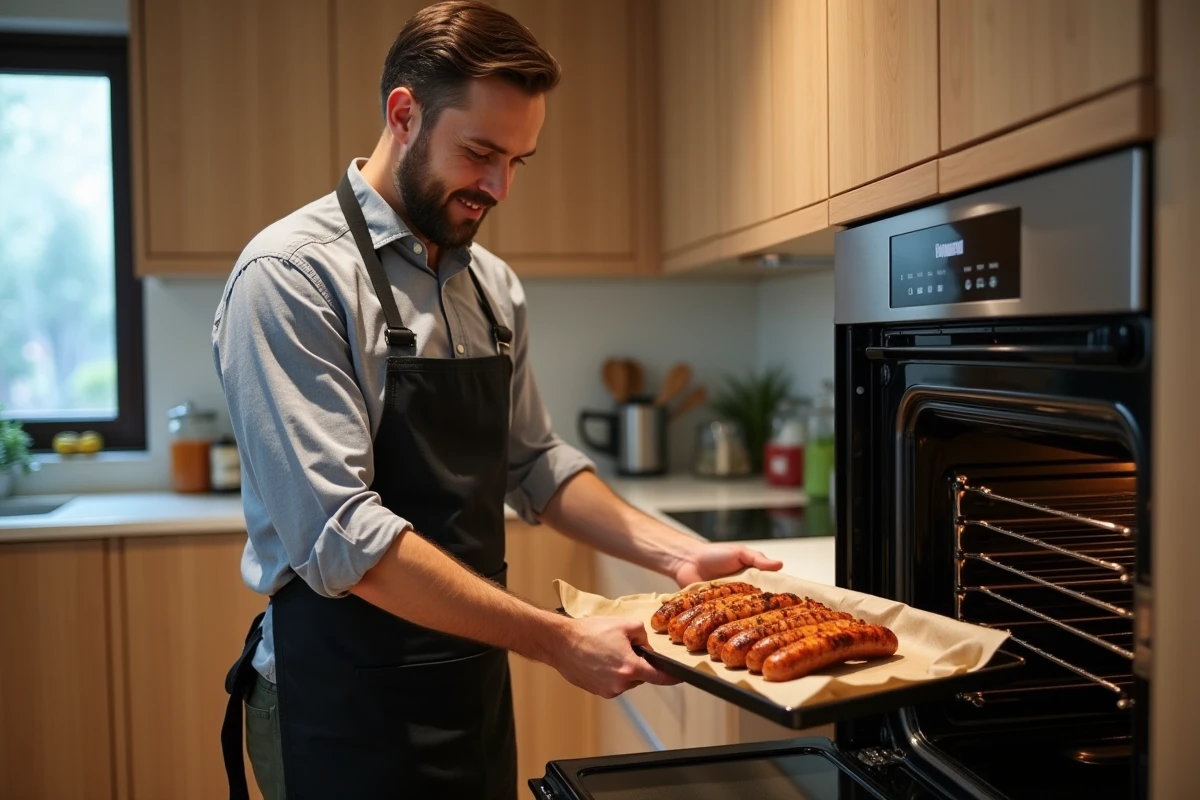
It’s better to organize their cooking. Arrange them on the tray, ensuring they are not touching so that the heat distributes evenly. Remember to preheat the oven without excess, and turn the merguez halfway through cooking: this simple but disciplined gesture makes all the difference in consistency.
To deepen or refine your technique, nothing beats some precise advice. For that, know that how to cook merguez in the oven details all the subtleties of gentle and successful cooking, keeping you far from any dried-out merguez.
The fundamentals of a juicy merguez: temperatures, durations, and attention
Successfully baking in the oven is not a matter of chance, and some concrete guidelines are better than a long speech. Start by setting the temperature to 180 °C, a compromise that keeps the meat tender without risking the rubbery effect of too high a flame. Generally, you should count between 18 and 20 minutes, not forgetting to turn the merguez halfway through cooking to ensure a perfectly harmonious result.
Here’s how to stack the odds in your favor: place the merguez on a rack above a dish, which allows you to collect the juices that flow out and prevents the sausage from bathing in fat. Some choose to add a sheet of parchment paper to retain even more moisture while limiting grease splatter. Every accessory can play a role in preserving tenderness.
Everything also depends on your actions. Never pierce the merguez: this reflex, however old, costs them their juiciness. Prefer gentleness: watch, turn, adjust the temperature as needed; it’s about observing and accompanying the cooking without haste.
Frying pan, barbecue, or oven: which method for flavorful merguez?
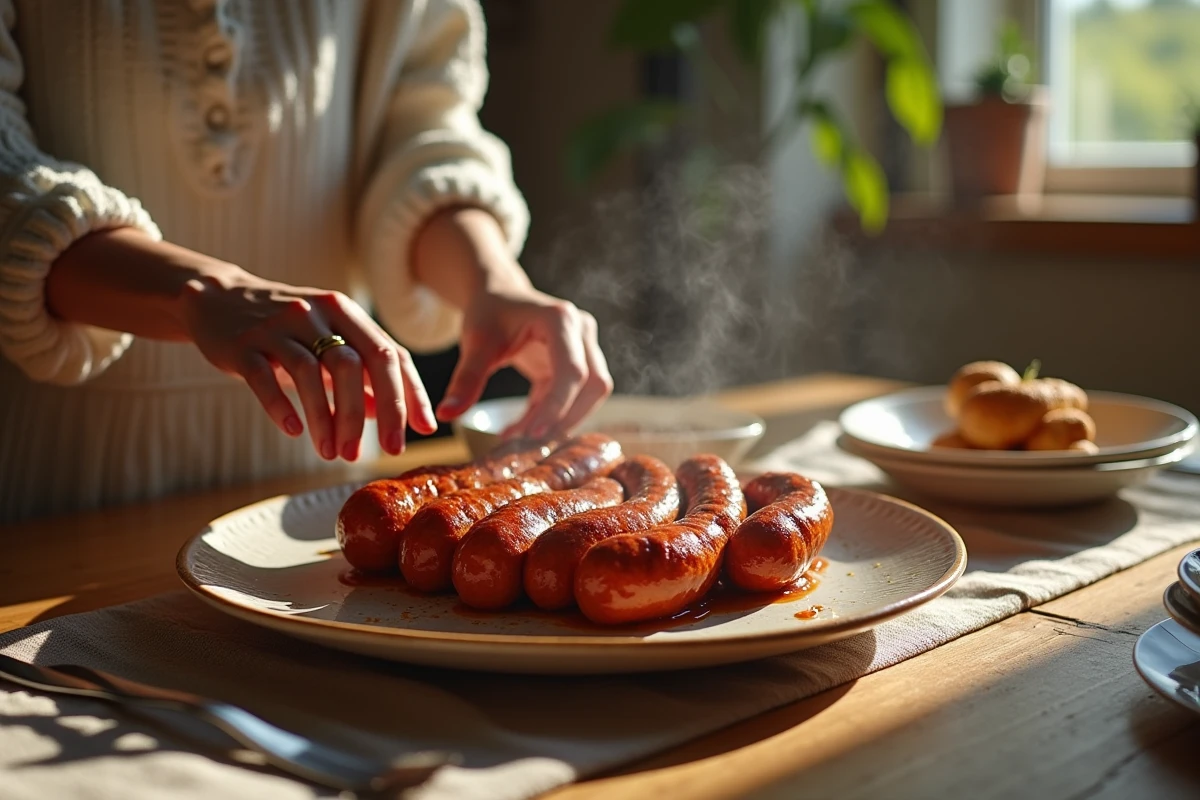
The technique chosen influences the character of the merguez all the way to the plate. The barbecue, for those who love the burn of charcoal and the fine golden skin, requires a sure gesture: no direct contact with the flame, but indirect cooking to preserve juiciness and authenticity. On the embers, the merguez gains depth, the smoky flavor emerges, and the atmosphere is set.
In the frying pan, the approach is quick. A medium heat, careful turning, sometimes a lid: the sausage browns without drying out, remains juicy at heart, and the result comes in just a few minutes. It’s the smart choice, the one for effortless evenings, for a straightforward and effective dish.
In the oven’s embrace, consistency and quantity are prioritized. Whether preparing for ten or two, the cooking becomes homogeneous, provided, as always, that you monitor the progress and apply those famous turns and temperature adjustments.
To quickly situate the particularities of each cooking method, here’s a comparative table:
| Method | Texture | Flavors | Control |
|---|---|---|---|
| Barbecue | Grilled, juicy | Smoky, intense | Demanding |
| Frying Pan | Golden, tender | Natural, concentrated | Accessible |
| Oven | Juicy, uniform | Mild, preserved | Reliable |
No matter your method, it’s the care that makes the difference in the final result. A barbecue for intensity, the frying pan for simplicity, the oven for consistency. But one rule truly matters: with a bit of effort, the merguez never disappoints, and it’s at the table that its success makes all the sense.