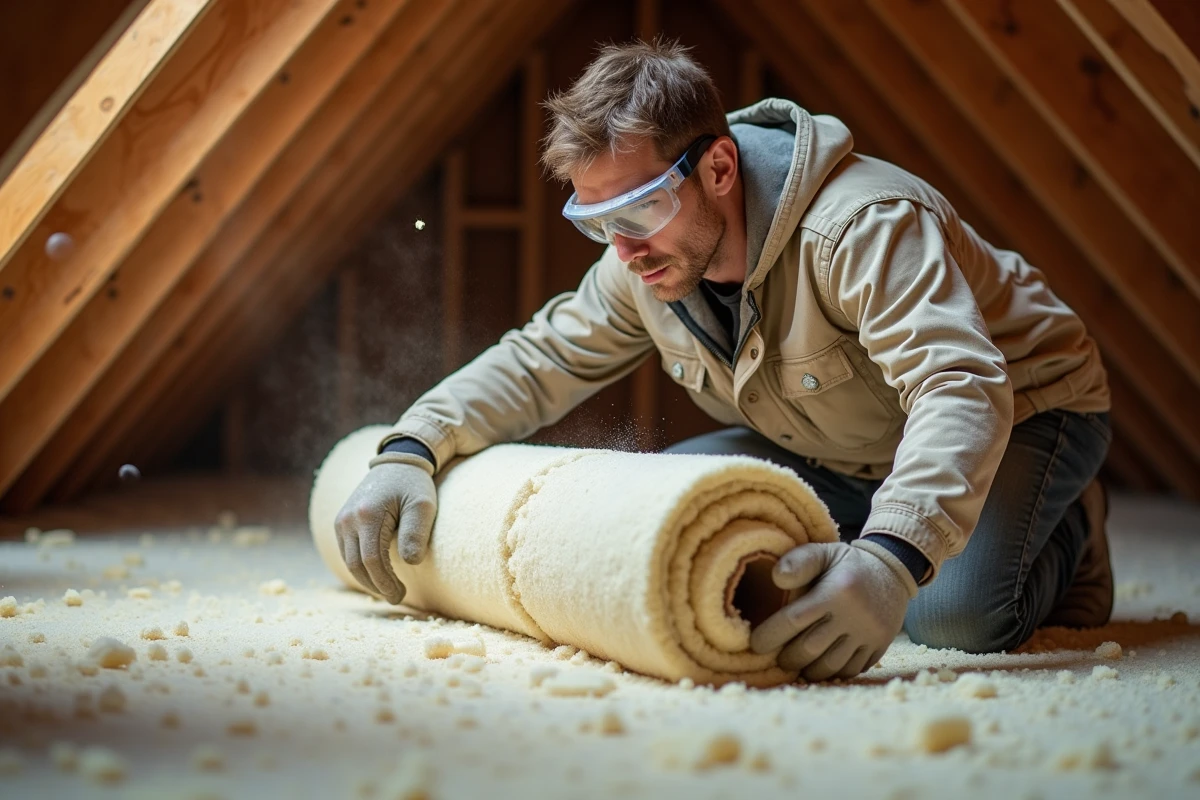
The roof is the first surface through which a building loses heat. Insulating this surface directly affects heating bills and thermal comfort in summer. However, among the available techniques, the thickness of insulation, and the real constraints of a sloped roof project, performance discrepancies are more pronounced than one might think. This article compares roofing insulation options based on concrete data to identify where to invest each euro in renovations.
Thermal resistance and insulation thickness: material comparison for roofing
The choice of insulation for the roof primarily depends on its thermal conductivity (lambda) and the thickness required to achieve the desired thermal resistance. The decree of February 15, 2026, sets a minimum threshold of R = 1.2 K/W for uninsulated attics. For sloped ceilings in converted attics, the requirements are higher.
Not all insulations achieve the same resistance at equal thickness. The table below summarizes the differences between common families.
| Type of insulation | Thermal conductivity (lambda) | Indicative thickness for high R-value in slopes | Suitable for low heights under slope |
|---|---|---|---|
| Glass wool | Medium | Thick (rolls or semi-rigid panels) | Poorly suited if space is limited |
| Rock wool | Medium | Comparable to glass wool | Poorly suited if space is limited |
| Polyurethane (panels) | Very low | Significantly thinner at equal performance | Recommended |
| Wood fiber | Medium to high | Significant thickness | Poorly suited if space is limited |
| Cellulose wadding (blown) | Medium | Moderate thickness in uninsulated attics | Reserved for uninsulated attics |
Polyurethane stands out for its very low lambda, allowing for high thermal resistance with reduced thickness. For a sloped roof where every centimeter counts, this difference changes the feasibility of the project.
Before selecting an insulation, one must know how to insulate the roof effectively considering the actual configuration of the attic and not just the material budget.

Insulation under slope with height less than 1.80 m: constraints that guides overlook
Converted attics with a height under the slope of less than 1.80 m are a common case in older houses. Standard guides treat the insulation of slopes as if the space available between rafters and interior finish is always sufficient. This is not the case.
Why insulation thickness becomes a structural issue
Installing rolls of mineral wool between rafters and then adding a cross layer under the rafters easily consumes about fifteen centimeters, sometimes more. In an attic where the usable height is already limited, every centimeter of insulation reduces the declared living space. Below 1.80 m of final height, the room loses its status as floor space in the regulatory sense.
Two approaches can circumvent this problem:
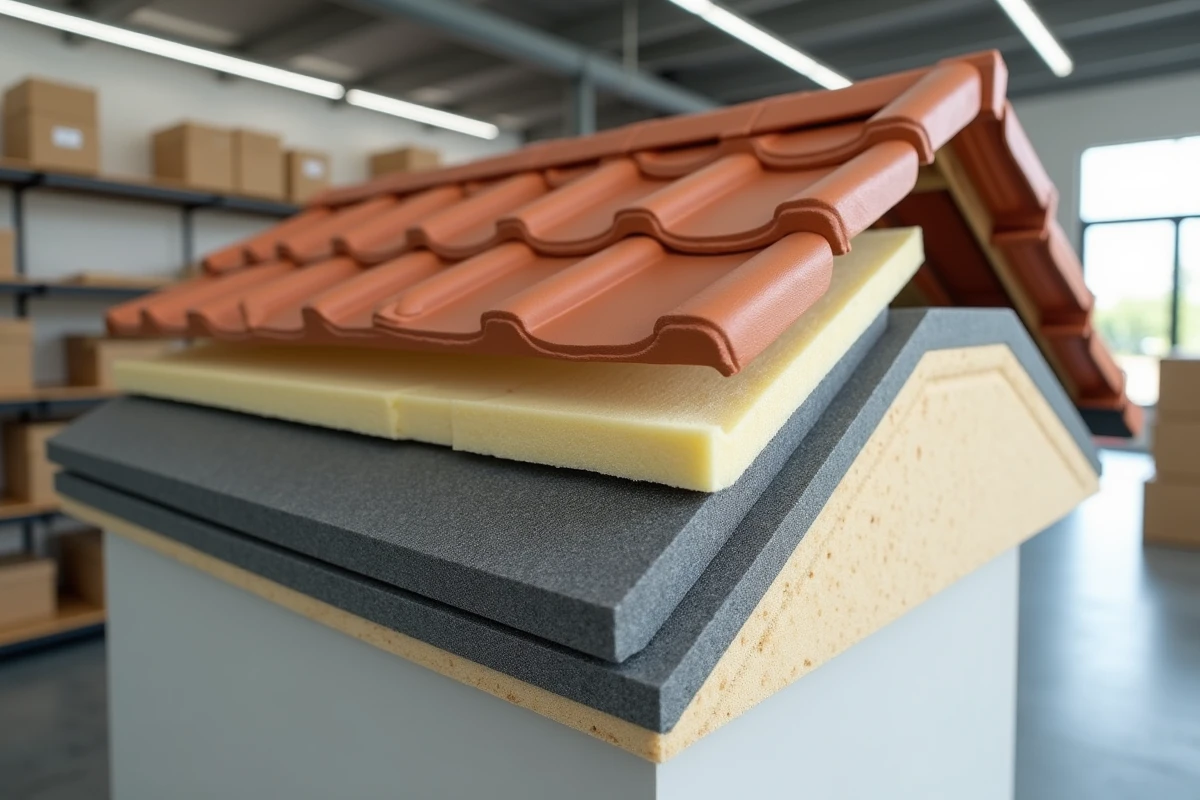
- Use low-thickness polyurethane panels, installed directly against the rafters, with an integrated vapor barrier. The thickness gain compared to mineral wool can represent several centimeters at equivalent thermal resistance.
- Opt for external insulation (sarking), which places all the insulation thickness above the framework. This technique fully preserves the interior volume but requires complete removal of the roofing.
- Combine a thin insulation between rafters and a rigid panel on the underside to limit total bulk while reducing thermal bridges at the rafters.
Sarking remains the most effective solution for maintaining height under the slope. However, its cost is significantly higher than internal insulation, and it involves a complete roofing project.
Thermal bridges at rafters: an underestimated flaw
In a classic insulation between rafters, the wood of the rafters creates a linear thermal bridge along the entire length of the slope. Wood conducts heat better than the insulation surrounding it. On a large sloped roof, these accumulated thermal bridges degrade the overall performance of the envelope.
Installing a continuous layer under the rafters (rigid or semi-rigid insulation) cuts these thermal bridges. But it adds thickness, which brings us back to the dilemma of height under the slope. The choice of material for this cross layer determines the final compromise between thermal performance and living volume.
Roof insulation and ventilation: the condensation risk in renovation
Insulating a roof without addressing moisture management can cause issues that may remain invisible for several years. Condensation within the insulation degrades its thermal performance and promotes the development of mold on the framework.
In renovation, the vapor barrier on the interior side (warm side) must be continuous and airtight. A poorly connected vapor barrier at wall-slope junctions or around roof windows allows water vapor to pass through, which condenses upon contact with the cold under-roof.
The under-roof itself plays a crucial role. A highly vapor-permeable under-roof (HPV) allows residual moisture to migrate outside. In contrast, an old bituminous under-roof blocks this migration and traps water in the insulation. Before installing high-performance insulation, checking the condition and nature of the existing under-roof conditions the durability of the entire intervention.
Real energy savings: what changes after roof insulation
Heat losses through the roof represent the most significant portion of thermal losses in an uninsulated house. Reducing these losses directly impacts heating consumption, as well as reliance on air conditioning in summer. The insulation limits transfers in both directions.
The extent of savings depends on the initial condition of the building. A dwelling with no insulation in the roof will see a much more pronounced reduction in consumption than a dwelling that is already partially insulated with aging material. The marginal gain decreases as thermal resistance increases, meaning that doubling the thickness of existing insulation does not halve the bill.
Roof insulation work remains the first item of energy renovation to address before changing heating systems or replacing windows. A well-insulated wall or high-performance windows do not compensate for a roof that allows heat to escape from above.