Adapting one’s home to age comfortably goes beyond just installing a grab bar in the shower. Since January 1, 2024, the MaPrimeAdapt’ scheme has replaced several previous funding mechanisms, changing the way seniors access home adaptation equipment. The process now includes a mandatory housing diagnosis and structured administrative support, two steps that condition the receipt of assistance.
MaPrimeAdapt’ and funding process: what changes concretely
Most articles on senior equipment list products without addressing the funding mechanics. This is a blind spot because the Anah’s approval must be obtained before work begins. Starting a project without this validation risks losing the entire aid.
The MaPrimeAdapt’ process requires the use of a project management assistant. This professional conducts a housing diagnosis, identifies priority adaptations, and assists with the administrative file. This step is not optional: it determines eligibility.
For those who wish to read articles from La Revue des Seniors before launching their project, it allows for a better understanding of the categories of fundable equipment and the criteria set by Anah.
The equipment covered by this scheme includes bathroom adaptations, stairlifts, and widening doors. However, small ergonomic everyday items (jar openers, sock aids, risers) generally do not fall under this funding and remain the responsibility of the individual or the APA depending on the level of dependency.
Fall prevention at home: beyond grab bars
Fall prevention accounts for a significant portion of adaptation expenses. Grab bars and non-slip flooring are the most well-known solutions, but other equipment deserves special attention.
Automated lighting and light paths
Nocturnal movements remain a major risk factor. Light paths, made up of motion-detecting LED strips, activate automatically when getting up. They do not replace traditional lighting but mark the route between the bedroom and the bathroom, where most nighttime falls occur.
A properly installed light path reduces disorientation upon waking, especially in individuals with mild cognitive impairments. The installation does not require heavy work: adhesive kits operate on rechargeable batteries.
Motorized roller shutters
Handling manual shutters requires reaching up and precarious balancing positions. Motorization eliminates this risk. It falls within the scope of fundable adaptations via MaPrimeAdapt’ when prescribed in the housing diagnosis.
Bathroom equipment for seniors: the criteria that really matter
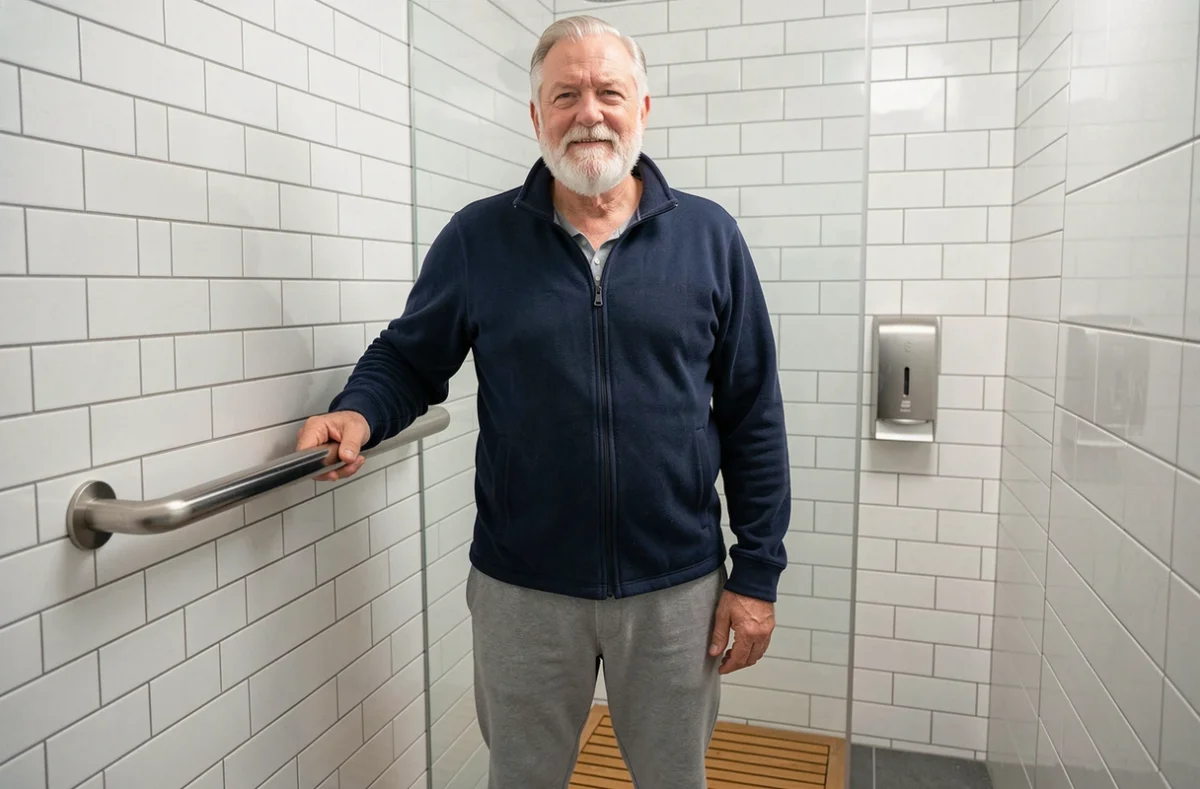
Walk-in showers dominate recommendations, rightly so. The nearly non-existent threshold eliminates the need to step over, a frequent source of loss of balance. A few technical criteria distinguish a truly secure installation from a simple bathtub replacement:
- The drainage slope must be sufficient to prevent any water stagnation, which would make the floor slippery despite a non-slip coating
- The thermostatic faucet limits the maximum temperature and prevents burns, a heightened risk for individuals with decreased skin sensitivity
- A wall-mounted foldable shower seat (not just a chair placed) offers superior stability and frees up space when not in use
- Grab bars must be fixed into the structure and not glued: a bar pulled out during support worsens the fall instead of preventing it
The quality of the installation is as important as the choice of equipment. A poorly connected ultra-flat shower tray can cause leaks that damage the subfloor within months.
Senior home automation and the end of 2G-3G networks: a technical blind spot
Teleassistance and home automation solutions for seniors have multiplied in recent years. Fall detectors worn on the wrist, motion sensors connected to a central unit, voice control of lighting: the offerings are wide.
A technical point often goes unnoticed. The scheduled shutdown of 2G and 3G networks will render certain teleassistance devices obsolete that rely on these frequencies to transmit alerts. Older generation teleassistance boxes, entry-level smartwatches, and some standalone fall detectors still use these networks.
Before investing in a teleassistance device, it is essential to check network compatibility. A device that operates only on 2G or 3G will need to be replaced in the medium term, which represents an unanticipated additional cost. The available data does not allow for precise dating of the network shutdown in France, but operators have confirmed the process.
What home automation handles well, and its limits
Motorization of shutters, lighting management, and remote heating control work reliably. However, feedback varies on voice assistants used as the main interface by elderly individuals: voice recognition struggles with certain voice tones or accents, and the initial setup remains complex without external help.
Home automation does not replace human intervention for daily living activities. It reduces some physical efforts and secures the environment, but its effectiveness depends on an installation suited to the user’s profile.
Adapted furniture for home care: lift chair and adjustable bed
The electric lift chair facilitates the transition from sitting to standing thanks to a motorized mechanism that tilts the seat forward. For individuals suffering from joint pain in the knees or hips, this equipment reduces muscle strain at the most critical moment of the movement.
The height-adjustable bed allows for adapting the sleeping position and facilitating transfers. It proves particularly useful when home care is provided by a caregiver, as it reduces postural constraints for both the caregiver and the patient.
These two pieces of equipment do not automatically fall under MaPrimeAdapt’. Their coverage depends on the aid plan defined under the personalized autonomy allowance (APA), after assessing the level of dependency by the departmental medico-social team.
Adapting seniors’ housing relies on a sequence of technical, administrative, and financial decisions. Choosing isolated equipment has little impact without a comprehensive housing diagnosis or verification of funding conditions. Starting with the MaPrimeAdapt’ process before any order remains the safest approach to avoid non-reimbursed expenses.