With a French car fleet whose average age reaches 11.8 years on January 1, 2026, motorists are facing rapidly evolving maintenance challenges. Aging vehicles, new rules on embedded data, and rising non-compliance rates in technical inspections: recent automotive trends are reshaping how to manage one’s car on a daily basis.
Connected vehicle data: what the European Data Act changes
Since September 12, 2025, the European regulation on data (Data Act) allows owners of connected vehicles to request access to the data generated by their car. In practical terms, a motorist can demand the transmission of this information to a third party, such as an independent garage.
Before this date, only the manufacturer’s network had access to real-time diagnostic data. Independent garages had to make do with information gathered via the OBD port, which was often limited. The Data Act rebalances this asymmetry by requiring manufacturers to provide “by design” access to data for the end user.
For the motorist, the change is tangible: comparing quotes between a dealer and an independent repairer becomes fairer, as both have access to the same technical data. This openness, which is analyzed on the auto space of Comme Vous Voulez, provides a negotiation lever when choosing where to have their vehicle serviced.

Technical inspection: the most common failures in aging cars
The aging of the French car fleet is directly reflected in the results of technical inspections. Vehicles over ten years old show a significantly higher non-compliance rate than newer cars.
Three categories of failures draw the inspectors’ attention to older vehicles:
- Axles, wheels, tires, and suspensions represent a significant share of non-compliance, with a marked impact on cars aged seven to ten years
- Pollution-related components (catalytic converter, particulate filter, emission levels) frequently lead to re-inspections on older diesels
- Braking, where wear on discs and pads can sometimes go unnoticed between two inspections spaced two years apart
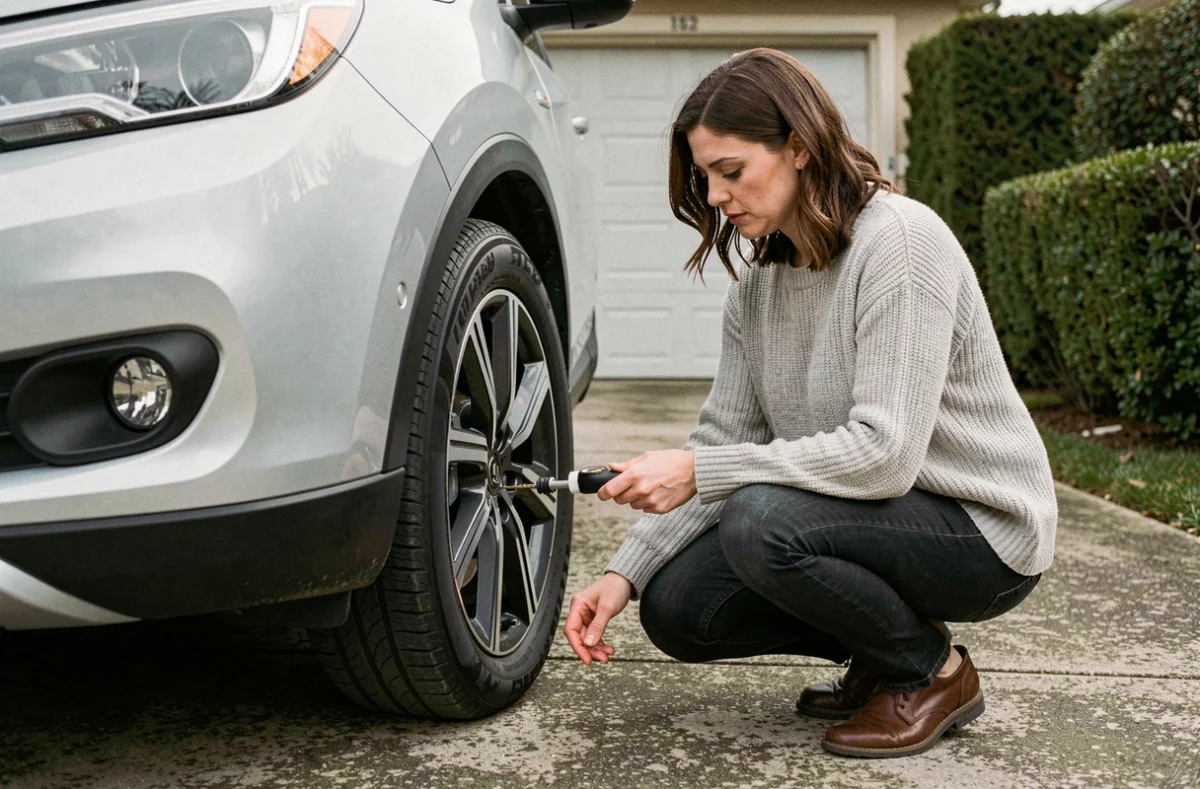
These data show that a simple tire pressure check is not enough. Checking for wear, deformations, and the condition of the sidewalls remains the most effective precaution to avoid a re-inspection.
Anticipate rather than suffer from re-inspection
The technical inspection only penalizes failures observed on the day. A vehicle that barely passes in October may show critical wear by December. For a car over ten years old, an interim assessment by a mechanic (brakes, tires, shock absorbers) six months before the inspection date allows for smoothing out expenses and avoiding unpleasant surprises.
French car fleet: comparison of constraints by vehicle age
The age of the vehicle determines both the frequency of maintenance, the risk of non-compliance, and access to diagnostic data. The table below summarizes the observed differences.
| Criterion | Vehicle under 5 years | Vehicle 5 to 10 years | Vehicle over 10 years |
|---|---|---|---|
| Access to connected data | Data accessible via the manufacturer and now transferable (Data Act) | Variable depending on original equipment | Often limited to the classic OBD port |
| Non-compliance rate in technical inspection | Low | Moderate, increase in tires and suspensions | Significantly higher than average |
| Priority maintenance items | Manufacturer revisions, software updates | Brakes, tires, battery | Suspensions, pollution, timing belt |
| Choice of repairer | Dominant manufacturer network (warranty) | Gradual opening to independents | Independents often more competitive |
Vehicles over ten years old accumulate risks: limited access to data, advanced mechanical wear, and costly maintenance items. In contrast, the Data Act is beginning to rebalance the situation for recent models equipped with connectivity.

Tires and suspensions: the underestimated maintenance item in daily life
Tires are among the top reasons for non-compliance in technical inspections, across all age groups. Pressure can be easily checked, but the condition of the sidewalls and tread depth require a visual inspection that many motorists neglect.
A tire with tread depth below the legal threshold of 1.6 mm no longer adheres properly on wet roads. On vehicles aged seven to ten years, worn suspensions exacerbate the problem: a worn shock absorber increases braking distance and accelerates uneven tire wear.
All-season tires or dedicated tires
The popularity of all-season tires remains strong in France. Not all models are equal: recent tests show that premium references significantly outperform entry-level options on winter roads. Before opting for a versatile tire, checking that it bears the 3PMSF marking (alpine snowflake) remains the minimum precaution to comply with the Montagne law in the relevant departments.
The cost of a set of all-season tires is comparable to that of two seasonal sets over the same period. For a vehicle that drives less than 15,000 km per year and does not frequent snowy passes, the compromise may hold up.
The older the fleet, the more spending categories multiply. Monitoring the condition of tires and suspensions, utilizing the right to access data from one’s connected vehicle, and planning a mechanical assessment between inspections are the three most concrete levers to manage one’s auto budget without compromising safety.