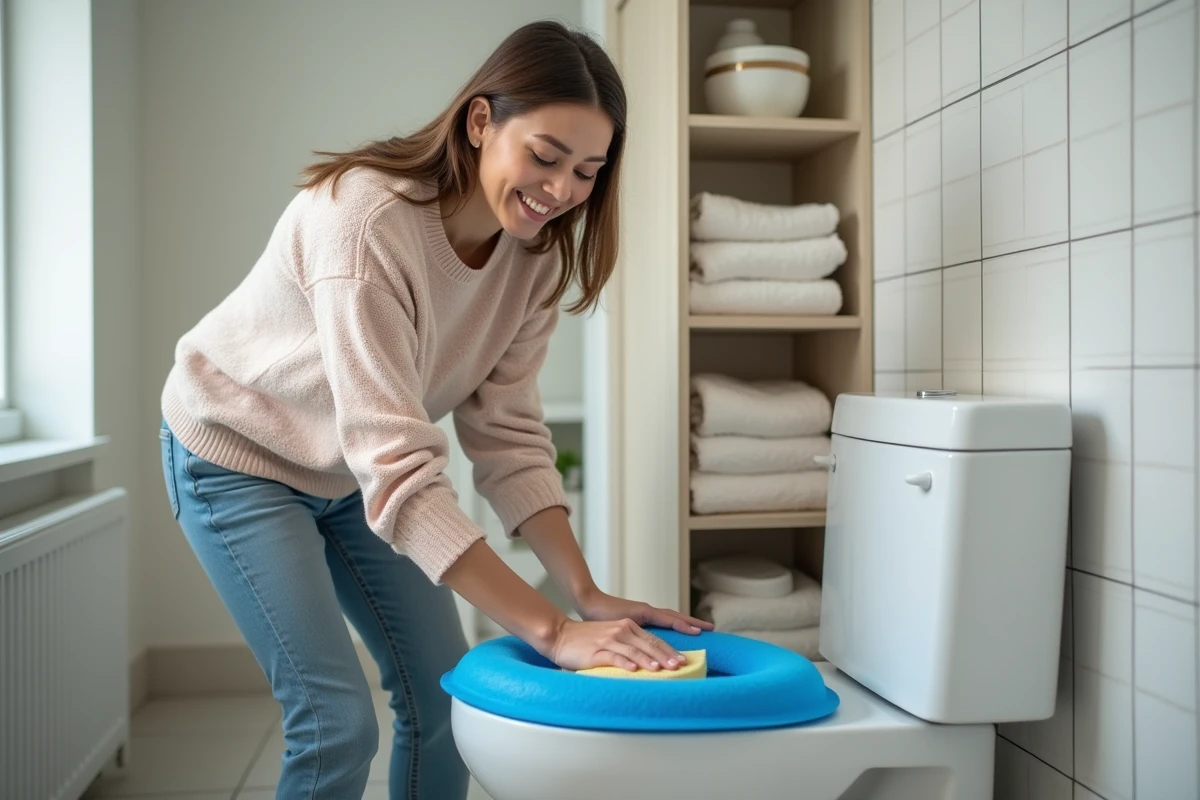
A foam toilet seat riser is an ideal playground for bacteria. The softness of the material hides a real challenge: its pores trap everything from stains to odors, and traditional cleaning methods are not enough to keep the equipment truly clean over time.
The temptation to use a commercial disinfectant spray is great. However, many household products damage the foam without making the riser any healthier. The result: the accessory ages prematurely and exposes users to irritating residues. It’s better to turn to simple, accessible solutions that restore the riser’s original appearance while preserving the health of users and the environment. Opt for natural alternatives that have proven effective without harming either the material or those who use it.
Why give specific care to a foam toilet seat riser?
This small piece of equipment found in many bathrooms is more than just an accessory: for many elderly people or people with reduced mobility, it means comfort, autonomy, and safety in daily life. But where traditional plastic can be cleaned with a simple gesture, foam absorbs everything: moisture, stains, bacteria, persistent odors…
Neglecting maintenance is not an option. A lack of cleaning leads to the development of microbes, deterioration of materials, and the appearance of odors or irritations. This also applies to nearby grab bars or fastening devices, which are also exposed. Taking the time for appropriate washing ensures a healthy and comfortable environment while also prolonging the longevity of the entire setup.
If you’re looking for a clear course of action, you will find all the methods for cleaning a foam toilet seat riser detailed on the Conseils Seniors website. They highlight natural solutions that respect both the material and everyone’s hygiene. Adopting these practices offers reliability and lasting well-being to the user, without compromise.
Natural gestures for effective daily cleaning
When it comes to foam toilet seat risers, it’s best to avoid corrosive products and rough scrubbing. Natural alternatives are sufficient to keep the material intact and ensure impeccable hygiene.
To maintain a riser without damaging it, prioritize these gestures:
- White vinegar: To be applied with a barely damp microfiber cloth, it dissolves stains and disinfects gently, without attacking the foam or sensitive parts.
- Baking soda: Sprinkle it on stains before scrubbing to effectively lift them and neutralize bad odors, especially when used in conjunction with vinegar.
- Marseille soap: Diluted in warm water, it deeply eliminates dirt and microbes while preserving the soft texture of the material.
For corners and seams, a soft sponge or a fine brush can reach difficult areas without damaging the structure. Then remember to rinse thoroughly and let your riser air dry: foam hates residual moisture. As for powerful chemical cleaners, it’s better to avoid them: they weaken the foam and significantly reduce the accessory’s lifespan.
Many add a few drops of tea tree or lemon essential oil to the cleaning solution for enhanced freshness and a pleasant scent, an easy touch to adopt. A light and regular cleaning is often sufficient: each cleaning prevents the establishment of bacteria and odors, particularly reassuring for the most vulnerable. These tips are equally relevant for the toilet brush and its holder, often overlooked even though they are exposed to the same risks.
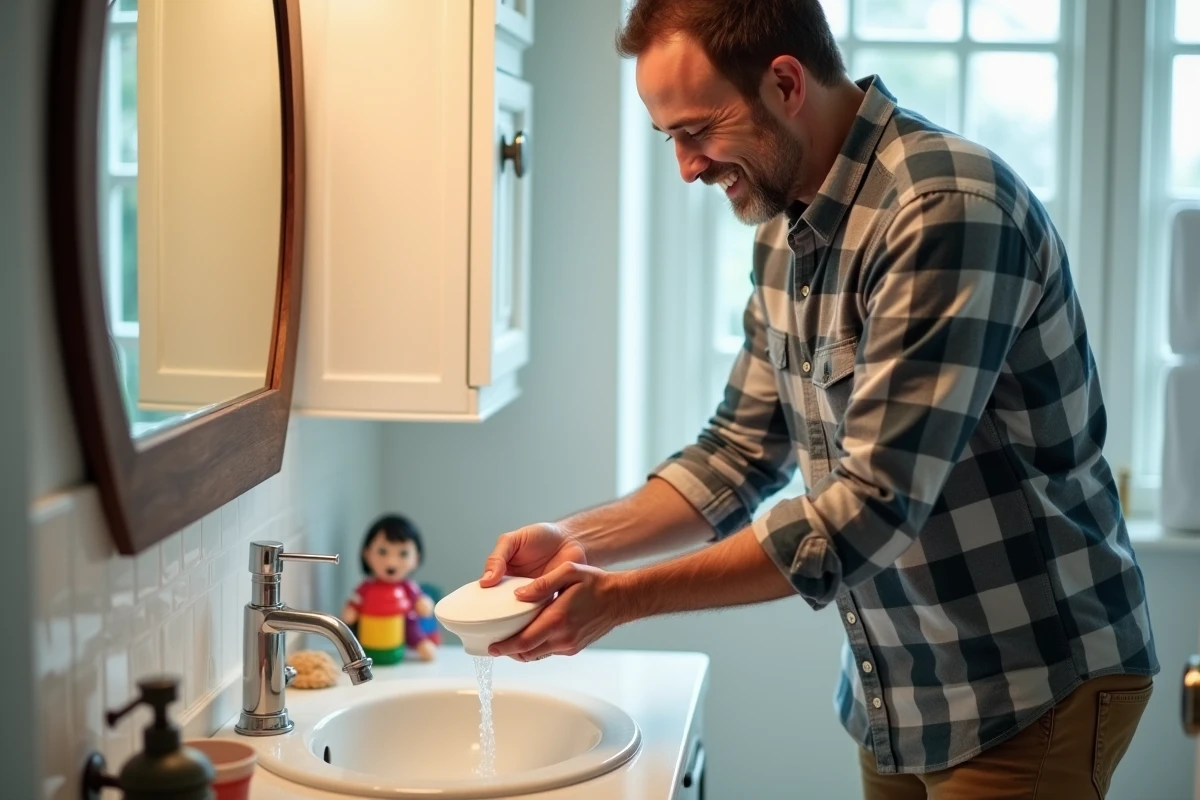
Restoring a like-new appearance: whitening, deodorizing, and preserving lifespan
Over time, the foam toilet seat riser takes on a yellowish hue, carrying stains and odors. UV rays, heat, and time promote oxidation and dulling of the material. However, restoring shine and freshness remains accessible without industrial products.
Here’s how to restore your riser to its original clarity:
- Baking soda paste: Mix two tablespoons of baking soda with a little warm water. Apply to yellowed stains, let sit for twenty minutes, then scrub with a soft sponge.
- White vinegar and lemon: A few drops of white vinegar in rinsing water or lemon juice left for about ten minutes on stains dissolve residues and leave a pleasant scent.
- Hydrogen peroxide (3%): Use with caution, after testing on a less visible area, gloved, and in a well-ventilated room. It is ideal for stubborn stains.
Preserving the original appearance also involves a few habits: keep it out of direct sunlight, rinse after each cleaning, and store in a well-ventilated space. Elements such as grab bars and fixtures also benefit from regular maintenance: all equipment thus stays looking good for longer.
To combat odors, a drop of lemon or tea tree essential oil in the rinsing water is enough to provide lasting fragrance. Clean, reassuring, ready for daily use: this is how the foam toilet seat riser fully fulfills its role for those seeking safety and autonomy.
A well-maintained riser inspires confidence day after day. This simple gesture protects against discomfort and health issues, ensuring reliable equipment for a long time. If each cleaning becomes a habit, the accessory can continue to support the routine without fail, proving that nothing has been left to chance.