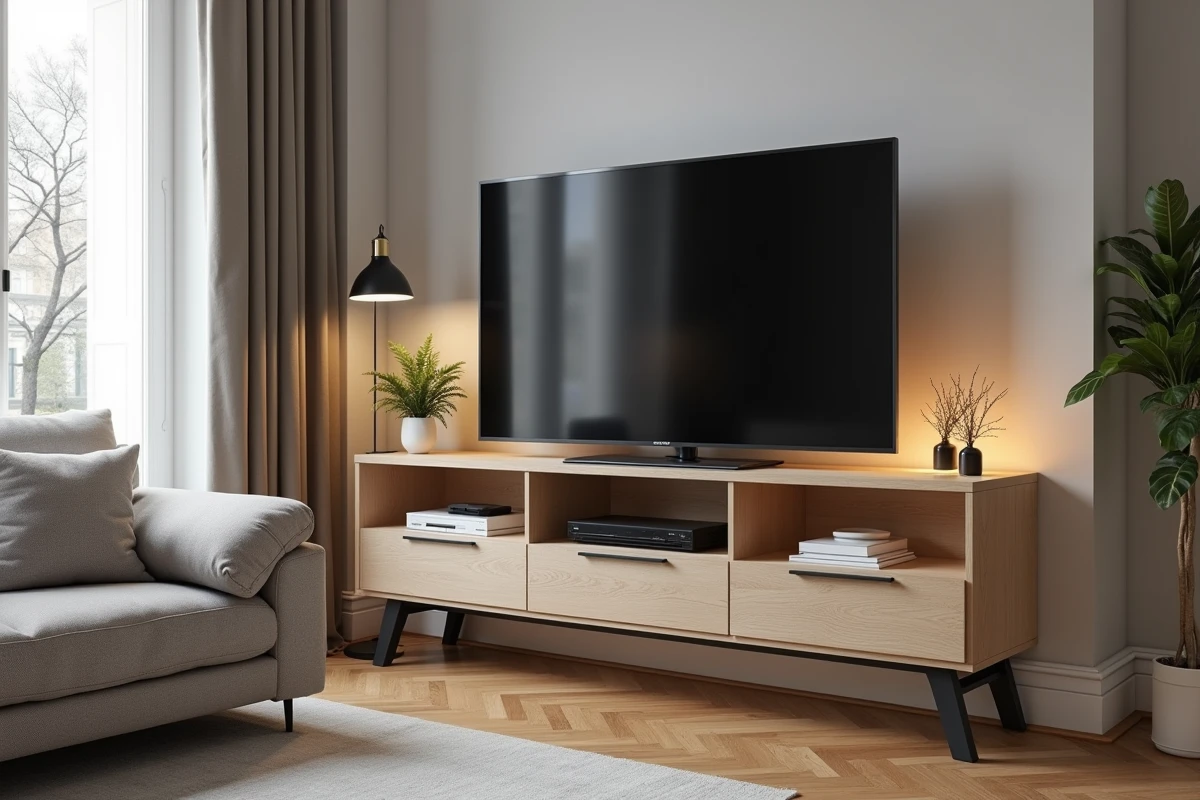
An angled TV unit refers to a piece of furniture whose top and structure fit the angle formed by two adjacent walls, freeing up floor space in the living room while orienting the screen towards the seating area. In 2026, this format goes beyond simply saving space to become a true technical and decorative feature, driven by three developments: integrated management of audio-video equipment, textured materials, and connected functions.
Integrated ventilation and wiring for a gaming and home cinema angled TV unit
The majority of decorative articles present the corner unit as a spatial solution. The technical angle is rarely discussed, even though it determines the durability of the equipment installed on it.
Since the 2025 catalogs of several major retailers, angled TV units have incorporated ventilated niches and dedicated cable passages for consoles, soundbars, and subwoofers. Passive ventilation (rear or side openings) prevents overheating of devices placed in a confined space between two walls.
Specifically, an “AV-friendly” corner unit stands out by three characteristics to check before purchase:
- Rear openings that are wide enough to allow air circulation behind a console or amplifier, without forcing the removal of the back panel.
- Cable management channels or clips integrated into the structure, which keep HDMI, optical, and power cables out of sight without pinching them.
- Niches with a height that accommodates a standard soundbar (most are between 5 and 7 cm high) without blocking the infrared signal from the remote control.
For gamers and home cinema enthusiasts, these technical details transform a simple decorative unit into a true multimedia station. Before choosing a model, it is useful to see the new items on D Kom Déco to compare the technical configurations offered this year.
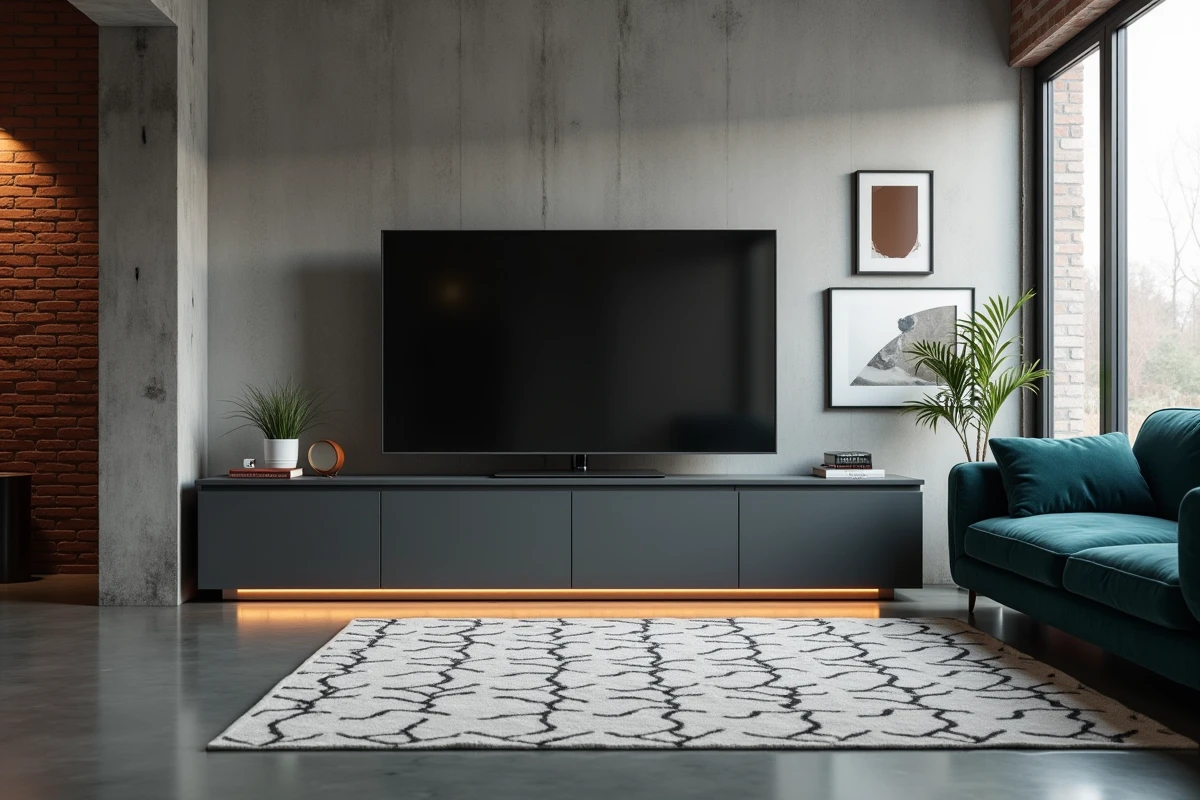
Connected angled TV unit: USB ports and wireless charging in 2026
The second notable evolution for 2026 concerns the integration of smart home functions directly into the furniture. “Smart home-ready” corner units come equipped with integrated power strips, USB-C ports, and sometimes induction charging surfaces.
This idea is not new for desks or bedside tables, but its transfer to the angled TV unit changes the game in the living room. Charging a smartphone or remote control without a visible cable removes a daily annoyance, especially in a corner where wall outlets are often inaccessible once the unit is in place.
What to check on a connected model
The position of the ports determines their actual usefulness. A USB port placed at the back of the unit, against the wall, has no practical interest. The best-designed models position the ports on the top of the surface (under a flap) or on a side edge accessible without moving the unit.
The induction charging power varies by manufacturer. Some surfaces only provide a slow charge, sufficient for a remote control but frustrating for a phone. Checking Qi compatibility and the advertised power remains the basic reflex before purchase.
Textured materials and fluted finishes for a design corner unit
Aesthetically, 2026 continues a trend that began in previous years: smooth and uniform surfaces give way to visible textures. Fluted wood (regular vertical grooves on door fronts), woven rattan panels, and veneers with pronounced grains dominate the catalogs.
On a corner unit, the fluted front creates a unique effect. The angled orientation relative to the viewer creates shadows that change with the lighting in the living room, adding depth to a corner often perceived as a dead space.
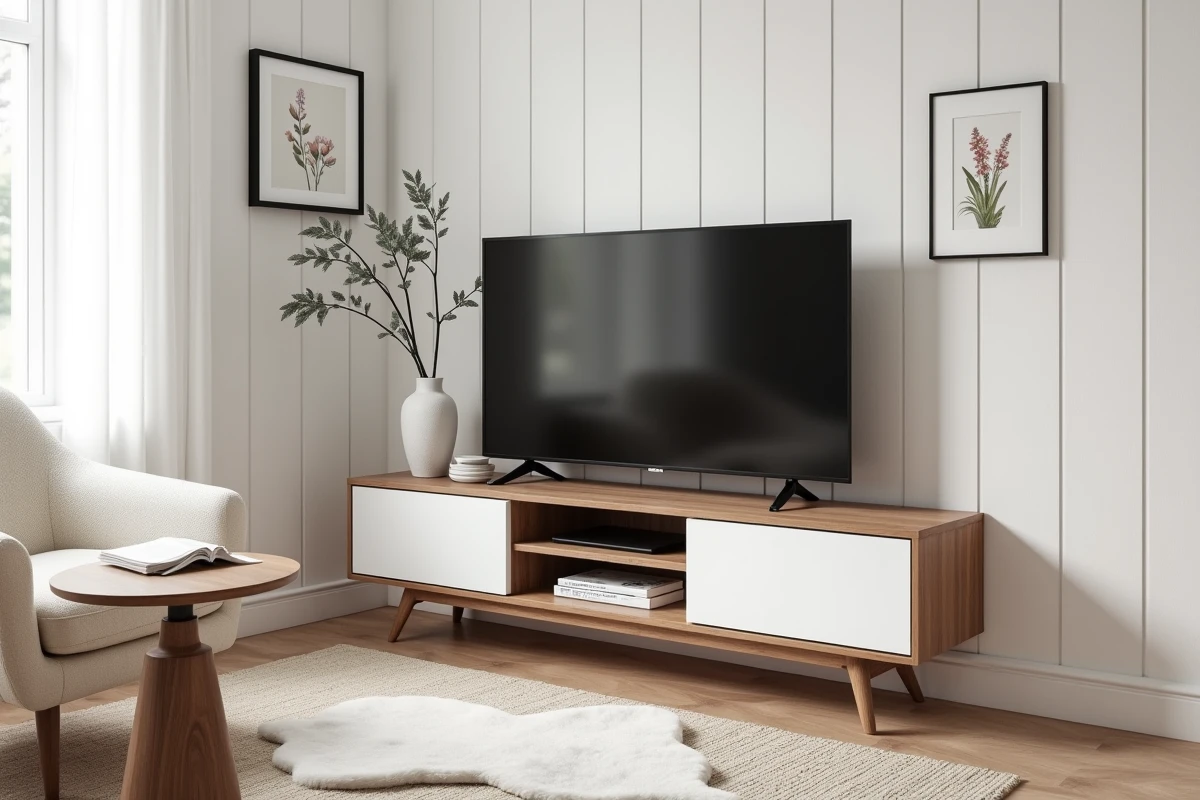
Combining wood and metal without weighing down the corner
The wood and metal combination (black steel legs, light oak top) remains a popular choice for angled TV units in 2026. The slender metal legs visually lighten the structure and facilitate vacuuming, a practical detail that floor-standing models do not allow.
An elevated corner unit on metal legs appears less massive than a solid box placed directly on the floor. This impression of lightness is important in modestly sized living rooms, where the corner occupied by the unit should not overwhelm the rest of the room.
Living room color palette 2026: neutral tones and dark accents for the TV unit
The dominant shades for living room furniture in 2026 are organized around two poles. On one side, neutral and warm tones (beige, sand, bleached oak) extend the bright minimalist trend. On the other, dark finishes (matte black, dark walnut, anthracite) fit into an aesthetic that design professionals call “dark luxury.”
For an angled TV unit, color directly influences the perception of depth in the corner. A light model visually opens the corner and reflects natural light. A dark model, on the contrary, anchors the corner and creates a pronounced focal point around the screen.
The choice depends on the natural brightness of the living room and the color of the adjacent walls. In a poorly lit corner, a light oak unit with a fluted front captures and redistributes light better than an anthracite model. In a large, well-lit living room, a dark walnut angled TV unit structures the space without appearing oppressive.
The angled TV unit of 2026 is no longer a spatial compromise but a fully-fledged technical, connected, and decorative feature. Before finalizing a model, the checklist boils down to three points: ventilation suitable for the equipment, real access to charging ports, and a finish consistent with the light in the living room.