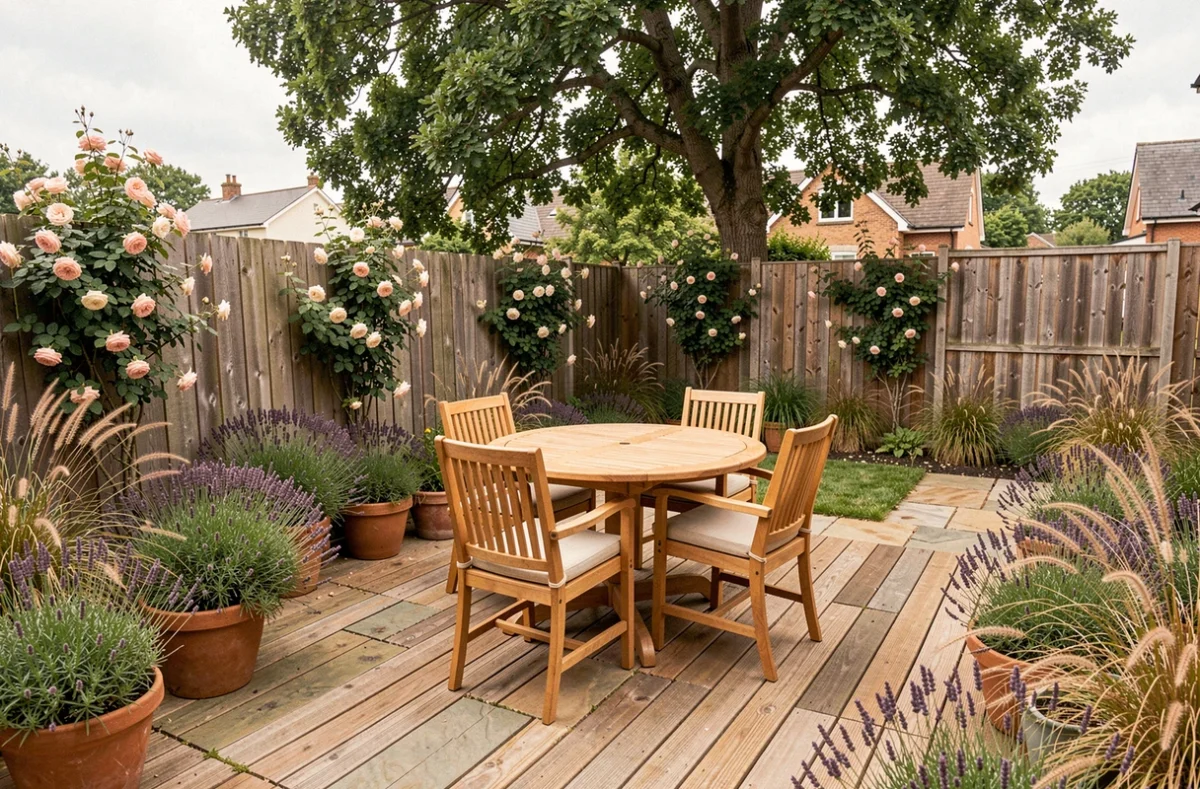
A garden that can be enjoyed all year round depends less on a large budget than on a design suited to the soil, local climate and maintenance requirements. The choice of materials, layout of living areas and selection of plants are what determine the durability of an outdoor space. Planning for water restrictions, the thermal performance of surfaces and the time actually available for maintenance changes how every square metre is designed.
Permeable surfaces and thermal comfort: two priorities before aesthetics
Most garden patios are designed with visual appeal as the main priority. The problem becomes apparent in summer, when a light-coloured stone surface reflects heat, or in autumn, when water pools because of poor drainage.
Measurement campaigns conducted in Paris in summer 2024 on different surfaces and planted areas confirm that the thermal comfort of an outdoor surface must be measured in the field, not judged from a colour chart alone. For a private garden, this points to materials that absorb less heat: untreated wood, light-coloured gravel and grass-filled permeable pavers.
ADEME lists solutions that combine shade, permeable surfaces and planting rather than treating them separately. In practice, a wooden deck laid over a gravel bed lets water seep through, stays comfortable under bare feet in July and needs only an annual clean. Pairing it with a nearby deciduous tree provides shade in summer and sunlight in winter, without the need for an additional structure.
Professionals specialising in outdoor landscaping at Jardindivert factor in these considerations from the initial design stage to avoid costly remedial work after the first summer.
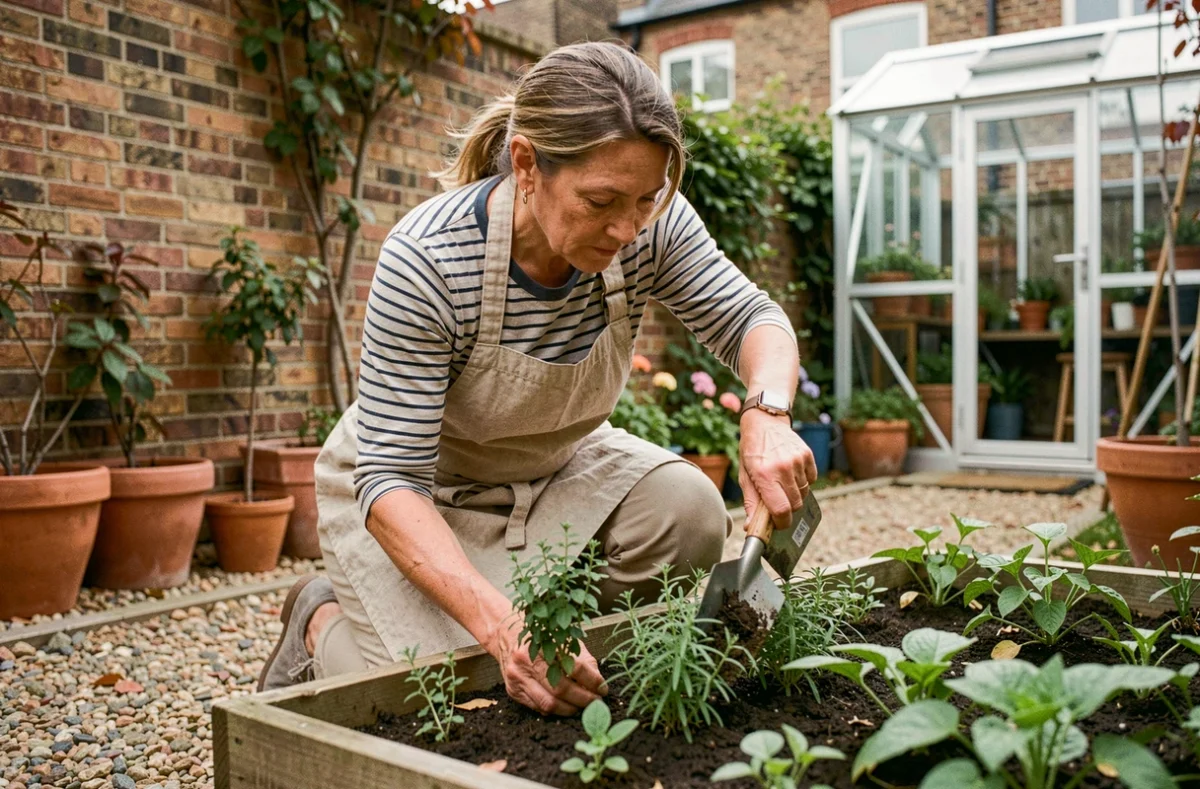
Water-wise plants: design a garden that does not depend on watering
Watering rules vary by area and drought alert level. Before planting, check the VigiEau platform or your local authority’s drought order to avoid ending up with a flower bed that cannot be watered in the middle of August. Some local orders allow exceptions for harvested rainwater, but these provisions vary from one municipality to another.
Choosing plants suited to local rainfall solves the problem at its source. Lavender, ornamental grasses, sedums and shrubby salvias can get through summer without watering once established. In winter, dried grasses and evergreen plants (rosemary, dwarf pittosporum) maintain visual interest and keep the garden from looking bare.
Arrange flower beds to reduce maintenance
A densely planted flower bed with a thick organic mulch layer reduces weeding and helps the soil retain moisture. The principle is simple: cover bare soil so it does not dry out or become muddy.
- Apply a generous layer of mulch (wood chips, buckwheat hulls or miscanthus) when planting to slow evaporation and suppress weeds
- Combine ground-covering perennials (hardy geraniums, yarrows, creeping thyme) with shrubs to fill gaps within two growing seasons
- Group plants according to their water needs: place thirstier plants near a water collection point and drought-tolerant ones around the edges
This grouping by water requirements, sometimes called hydrozoning, prevents water being wasted on plants that do not need it.
Outdoor living areas: a patio, relaxation nook and dining space for every season
A garden that can be used in January as well as June needs sheltered areas protected from the wind and positioned to catch the winter sun. A common mistake is to place the main patio facing due south without a windbreak: pleasant in May, scorching in July and windswept in November.
A patio partially covered by a bioclimatic pergola or a leafy trellis can be used for more of the year. The adjustable slats of a pergola let in the low winter sun while blocking the high summer sun. A grapevine or wisteria-covered trellis has the same effect, with maintenance limited to an annual prune.
Garden furniture: choose durability over replacement
A low-cost synthetic rattan garden set can warp after two winters. Furniture made from acacia, powder-coated aluminium or galvanised steel can last a decade without treatment, even when left outdoors.
- Aluminium does not rust, is lightweight and can be cleaned with plain water
- Acacia naturally resists moisture without chemical treatment
- Galvanised steel withstands frost and rain, developing a patina without deteriorating
Investing in durable furniture avoids the buy-and-replace cycle, which can end up costing more than buying quality furniture once.
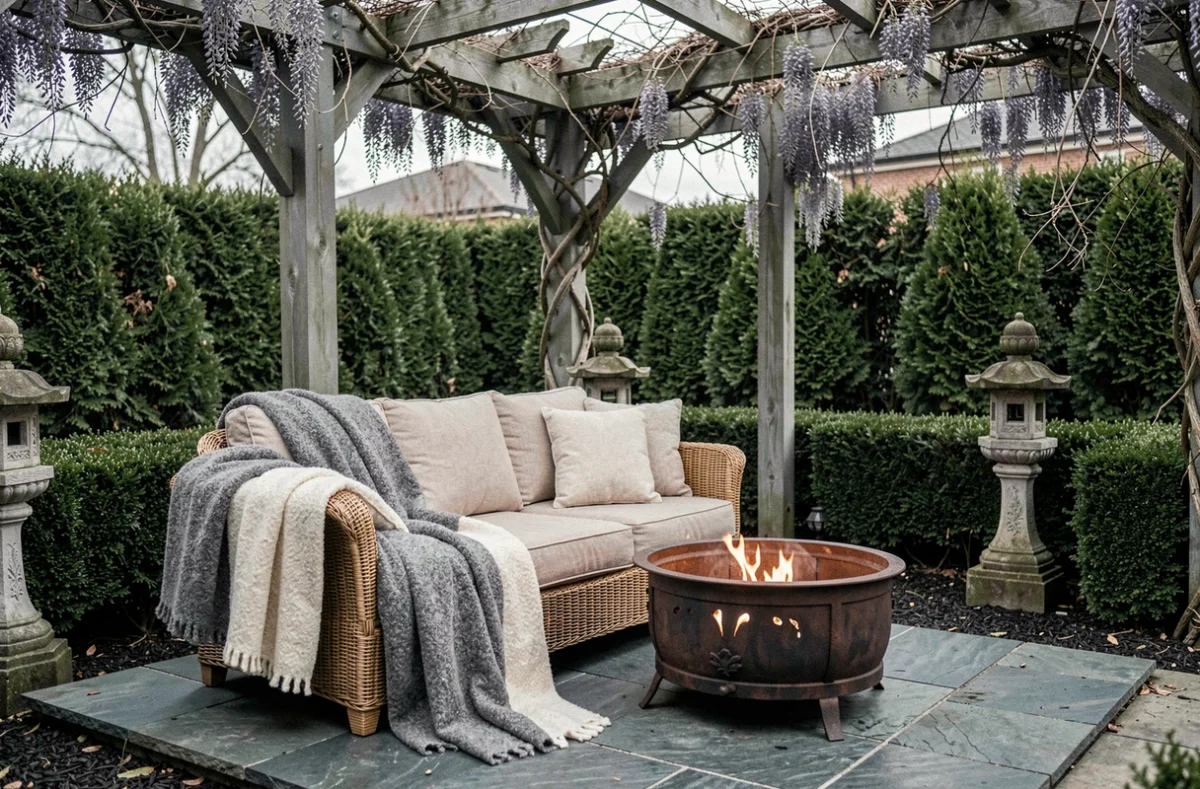
Outdoor lighting and rainwater management: two often-overlooked essentials
Without lighting, a garden becomes unusable as soon as it gets dark—around 5 pm in winter. Low-voltage solar bollard lights along paths and a directional spotlight on the patio are enough to extend the use of the space without extensive electrical work.
Collecting rainwater can meet a significant share of watering needs and reduce reliance on the mains supply. An underground or above-ground tank connected to a downpipe can feed a gravity-powered drip irrigation system, with no pump or electricity required. Before installing one, it is worth checking your local planning rules (PLU) and stormwater zoning: some local authorities require rainwater to be managed on-site, which may affect the tank’s size.
Factor future maintenance into the design
Every feature added to a garden creates maintenance work. A row of thuja hedges needs trimming twice a year. A pond requires regular cleaning. Assess the weekly maintenance time before approving a design to avoid creating a beautiful garden in June that is neglected by October.
An outdoor space designed from the outset to use little water, durable materials and a realistic maintenance routine will remain enjoyable long after its first season. The most successful garden is not the one that impresses on opening day, but the one that takes the least effort to keep welcoming in December.